How surveillance operatives deal with anti-surveillance
Simon Henson breaks down a real-world anti-surveillance problem
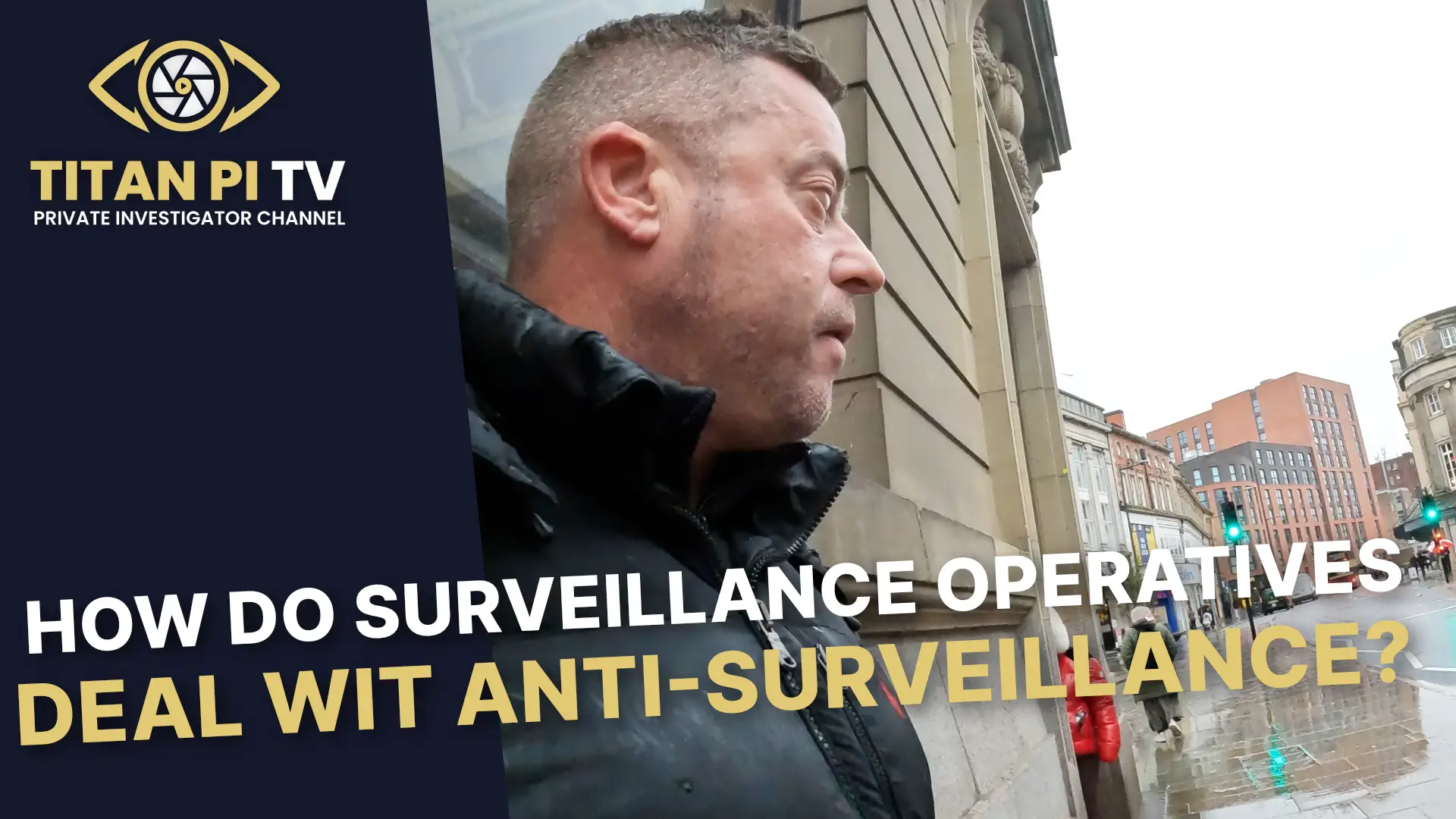
In the latest episode of Titan PI TV, channel host Simon Henson turns his attention to one of the most challenging realities of professional surveillance work: what happens when the person you’re watching starts behaving in a way that could expose you. The episode focuses on a classic “pinch point” scenario—moving from a busy public space into a quiet, confined area—and the practical, disciplined steps operatives use to avoid being detected.
At the centre of Simon’s demonstration is a deceptively simple environment: an alleyway. Yet in surveillance terms, an alleyway isn’t just a shortcut between streets; it can be a deliberate tool used by a subject to check whether they’re being followed. Narrow access, limited exit routes, reduced foot traffic and sharper sound carry make these spaces highly sensitive. A tail that looks effortless on a crowded pavement can unravel instantly the moment the crowd thins out.
Rather than presenting anti-surveillance as a glamorous cat-and-mouse game, Simon frames it as a matter of method. The key theme in this episode is that competent surveillance is not about charging after someone and “keeping up”. It is about teamwork, timing, positioning and decision-making under pressure—especially when the subject’s movements force the surveillance team into awkward terrain.
“Offside parallel”: the position that stops you being burned
Simon begins by explaining his role in the moment: he’s “the operative on the offside parallel”. In plain terms, that means he is not the person directly behind the subject. Instead, he’s positioned to the side—close enough to move when needed, but not so close that he becomes an obvious follower when the environment changes.
This concept is crucial when dealing with potential anti-surveillance behaviour. A subject who suspects they’re being watched will often try to reduce the number of plausible “innocent” people around them. Turning into a quiet alleyway from a busy area is a straightforward way to do that: the crowd disappears, the options narrow, and any single person who follows becomes highly visible.
Simon’s solution is simple but professional: he does not enter the alleyway at all. Instead, he holds position—waiting for direction and confirmation from another operative who still has the visual.
That decision may feel counterintuitive to the untrained eye. Many people assume surveillance success depends on never losing sight of the subject. In reality, blindly maintaining line-of-sight can be the fastest way to get noticed. The episode illustrates that sometimes the best way to stay on a subject is to resist the urge to follow them into the worst possible place.
Communication beats improvisation
With Simon holding outside the alleyway, the team dynamic becomes the driver of the operation. He describes waiting “for that direction from the person with the visual”—and he even gives a flavour of how clear the communication needs to be.
Rather than vague instructions, the operative with the visual provides decisive directional calls: “left, left, left” or “right, right, right”. This kind of phrasing matters. It is fast, unambiguous, and reduces the chance of misinterpretation when things happen quickly.
This is one of the episode’s most instructive points: a surveillance team is only as good as its comms discipline. In high-risk moments—where a wrong decision could expose the entire job—there is no room for guesswork or chatter. Short, repeatable calls support rapid movement without forcing operatives to stop, hesitate, or stare at their radios/phones.
Clearing corners without advertising yourself
When the direction comes—“that’s the subject at left, left, left”—Simon explains the next step: he can “go around that corner” and “clear it by just having a quick look”.
This “quick look” is a subtle concept with big implications. In surveillance work, looking is unavoidable, but how you look determines whether you appear normal or suspicious. Stopping abruptly, craning your neck, or peering too intently can draw attention. A controlled, brief check lets an operative confirm whether the path is clear and whether the subject is still moving, while keeping their own behaviour within the range of what bystanders might consider ordinary.
Simon describes confirming that “it’s clear the subject’s still walking”, after which he continues down. The important detail here is that his movement is contingent on information—he’s not reacting emotionally, not rushing, not gambling. He’s responding to a system.
Why you don’t follow into the alleyway
The episode then reveals the alleyway itself: “this is the alleyway to the left here where the subject came out” and, Simon notes, “we’ve not entered it at all”.
That line is the core lesson of the segment. The subject used an alleyway—transitioning from a busy area to a quiet one—creating ideal conditions to spot a tail. But the team neutralised that advantage by refusing to be funnelled into the environment that favours the subject.
This is how surveillance operatives manage anti-surveillance without escalating the situation. The aim is not to “win” an encounter. The aim is to remain invisible.
By not entering, the operative avoids becoming the only person following through a confined corridor. Instead, the team uses parallel positioning and coordinated movement to reacquire the subject when they emerge, or to maintain coverage through other operatives who are better placed.
In other words, the team allows the subject to move through the space without giving them the confirmation they might be seeking.
The principle: busy-to-quiet transitions are danger zones
Simon summarises the technique as “how you deal with going down an alleyway from a busy area to a quiet area”. That busy-to-quiet transition is a recurring danger point in surveillance and is one of the simplest anti-surveillance tactics a suspicious subject can deploy.
In busy areas, the noise and foot traffic provide cover. In quiet areas, every sound and movement carries. If a subject pauses, glances back, or turns suddenly, there are fewer distractions to hide behind.
This is why the episode’s approach is so practical. It is not built around fancy kit or dramatic tactics. It is built around:
- Positioning (offside parallel rather than directly behind)
- Patience (holding and waiting rather than pushing into a trap)
- Information flow (the operative with visual directs movement)
- Low-profile checks (clearing corners quickly without telegraphing intent)
- Avoiding predictable behaviour (not automatically following into confined spaces)
For viewers interested in how real surveillance is conducted—particularly those who assume it resembles television drama—this is the kind of grounded, repeatable tradecraft that makes operations work.
What this reveals about anti-surveillance in the real world
Although this clip is brief, it hints at a broader truth: anti-surveillance is often less about elaborate countermeasures and more about creating simple situations where a follower’s behaviour becomes obvious.
A subject does not need specialist knowledge to test whether they’re being followed. They can:
- take sudden turns,
- slow down unexpectedly,
- enter and exit quiet passageways,
- loop around a block,
- stop at thresholds (doorways, corners, junctions) to see who mirrors them.
The operative’s job is to avoid mirroring in a way that looks intentional. That is where team-based coverage and roles like the offside parallel become essential. If one operative is forced into a compromised position, another can take over without the subject noticing a continuous, consistent “shadow”.
Simon’s demonstration is a reminder that surveillance is less about proximity and more about continuity without pattern. You want to stay close enough to maintain coverage, but varied enough in placement that the subject cannot confidently conclude they’re being followed.
The takeaway
This latest Titan PI TV episode offers a compact, highly instructive look at how surveillance operatives deal with anti-surveillance pressure points. The alleyway scenario is a perfect example of how quickly an environment can shift from low-risk to high-risk—and how disciplined positioning and communication can prevent a subject from realising they are being monitored.
For anyone interested in surveillance tradecraft, the message is clear: when the terrain changes, the best operatives don’t panic, don’t chase, and don’t force the moment. They hold, they coordinate, they clear, and they move only when the odds are in their favour—ensuring the subject continues on unaware that anything is happening behind them.
What’s Next on Titan PI TV?
Titan PI TV continues to grow steadily, with over 3,200 subscribers and counting—a testament to the appetite for straight-talking guidance in a complex field. If you found Simon Simon’s insights useful, subscribe to the channel to catch future episodes. New content drops every Friday at 3:00 pm, offering grounded advice for investigators, agency owners, and professionals who work with them.
Thank you for reading, watching, or listening to this week’s blog post on Titan PI TV. For more expert advice and behind-the-scenes insights, subscribe to Titan PI TV on YouTube or download the Titan PI TV podcast wherever you get your podcasts. If you found this information helpful, please give us a thumbs up and subscribe to our channel. Stay tuned for more insights into the world of private investigations. Until next time, stay safe and keep learning!
Titan PI TV: Uncovering the Truth, One Investigation at a Time.