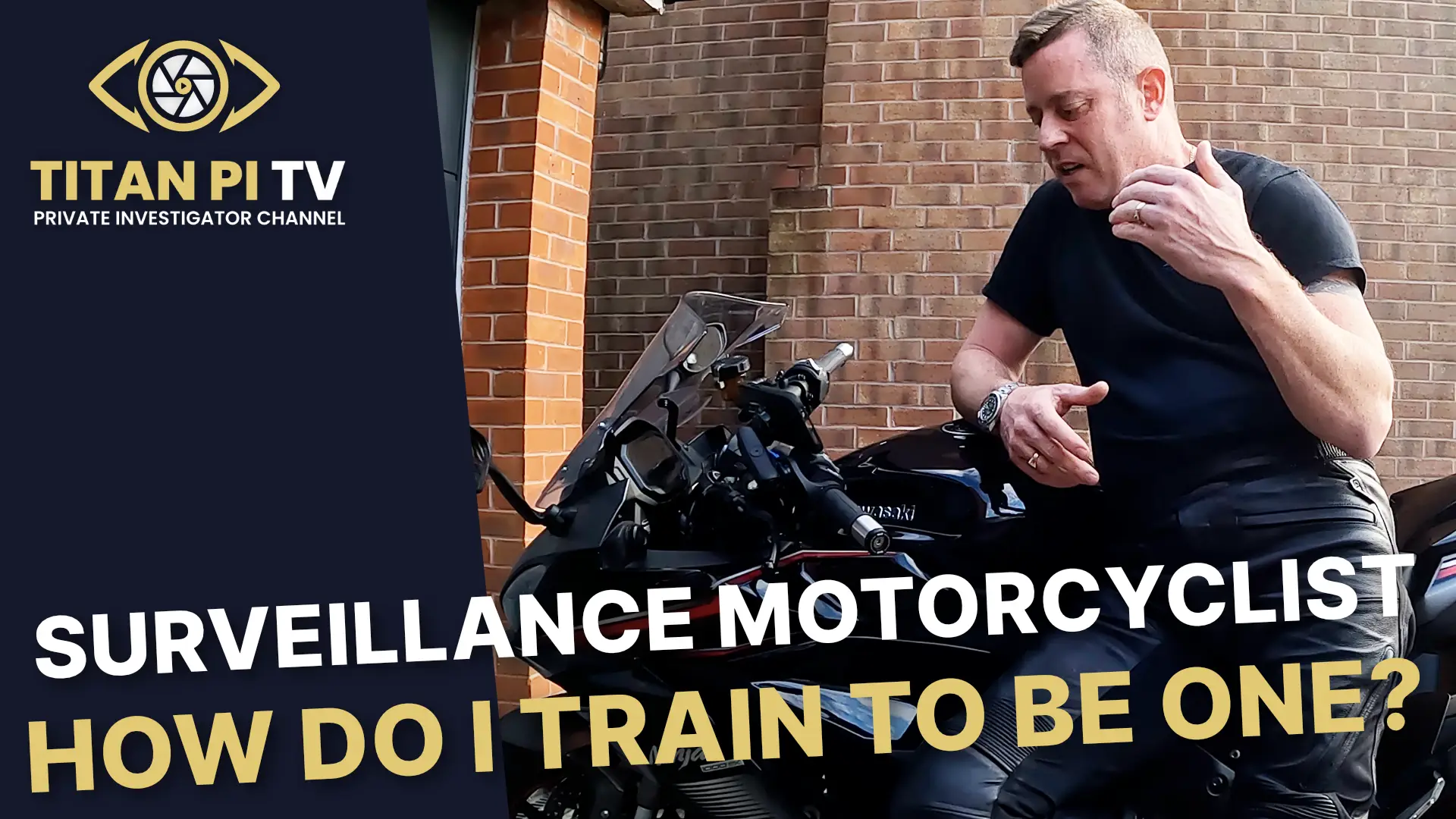
Surveillance Motorcyclist: How Do You Train to Become One?
Inside the Role of the Surveillance Motorcyclist
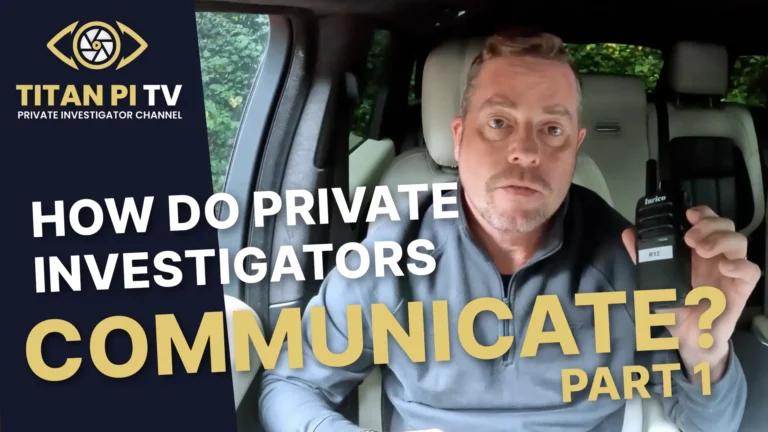
In the latest episode of Titan PI TV, host Simon Henson, Managing Director of Titan Private Investigation Limited, takes viewers behind the scenes of one of the most specialist and least understood roles in professional surveillance: the surveillance motorcyclist. Filmed against the backdrop of Titan’s live operational environment, the episode offers rare insight into how motorcycle operatives support covert investigations across the UK — and what it really takes to train for this demanding role.
What Does a Surveillance Motorcyclist Actually Do?
At its core, the role of the surveillance motorcyclist is about adaptability, speed and problem-solving. In live surveillance operations, things rarely go to plan. Traffic congestion, sudden route changes, bus lanes, roadworks and unexpected stops can all compromise vehicle-based teams. When that happens, the motorcycle operative is often the one who “saves the day”.
As Simon explains, motorcycles are inherently more adaptable than cars. They can safely and legally filter through traffic, use bus lanes in certain circumstances, and make progress where conventional vehicles cannot — all while remaining covert. This makes them invaluable during urban operations, particularly in cities such as London where a subject entering a taxi or bus lane could instantly defeat a car-only team.
The surveillance motorcyclist operates as part of a co-ordinated convoy, constantly listening to live radio commentary from the “eyeball” vehicle — the car directly following the subject — and any backup units. Throughout the day, the motorcyclist will “yo-yo” up and down the convoy, positioning themselves where they are most needed at any given moment.
The Language of the Operation: Three Critical Commands
Clear communication is fundamental to surveillance, and the motorcyclist listens for three key commands that dictate their movements:
- Make ground
This is an early warning. The eyeball vehicle signals that it may soon require assistance. The motorcyclist begins moving up through traffic, preparing to intervene if the situation escalates. - Come through
This is the call to action. The motorcyclist takes over the eyeball role, often after vehicles have been delayed by traffic lights, congestion or road restrictions. - Cancel
Situations change quickly. If the bike is no longer required, this command pulls the motorcyclist back before they unnecessarily expose themselves or disrupt the convoy.
These commands allow the team to remain fluid and responsive, ensuring continuity of surveillance even under pressure.
Why Motorcyclists Are Still Essential — and Increasingly Rare
Despite their importance, surveillance motorcyclists are becoming a dying breed. As Simon highlights, very few organisations train for this specialist role, and Titan is, to his knowledge, the only provider in the UK offering structured training specifically for surveillance motorcyclists.
This decline is concerning, because the operational need has not gone away. If anything, it has increased. Modern traffic enforcement, CCTV, ANPR systems and bus lane cameras mean that vehicles straying into restricted areas risk fines, loss of cover and potential compromise of the operation. A motorcycle, by contrast, can often operate legally and discreetly where cars cannot.
However, the role is not without risk. Riding a motorcycle in live traffic environments is inherently dangerous, and surveillance adds further cognitive load. Riders must manage advanced riding skills, radio commentary, situational awareness and covert behaviour simultaneously. This is why proper training is essential.
How Titan Trains Surveillance Motorcyclists
Titan’s five-day surveillance motorcyclist course is designed to bridge the gap between competent rider and operational specialist. It is not a certificated qualification like Titan’s RQF Level 4 surveillance courses, but it is deeply practical and rooted in real-world deployment.
Day One: The Check Ride
Training begins with a rigorous check ride. This is not about teaching riding skills from scratch, but about assessing whether the candidate already possesses the necessary ability, control and road sense. The ride is followed by a detailed debrief to identify strengths, weaknesses and readiness for the role.
Day Two: Covert Riding and Use of Cover
The focus shifts to surveillance-specific techniques. Riders learn how to use vehicles as cover, where to position themselves within a convoy, and how to move dynamically in response to commentary. They practise following vehicles discreetly, managing distance, and anticipating subject behaviour.
Handovers are also introduced. While motorcyclist-to-motorcyclist handovers are rare in real operations, they are invaluable training tools for learning radio discipline and situational awareness.
Day Three and Four: Live Team Integration
This is where the course becomes truly immersive. Trainees are embedded within a live surveillance team of three or four vehicles, performing the full motorcyclist role in realistic scenarios. They respond to commentary, make ground, come through, and manage losses — all under supervision.
Day Five: Final Operational Exercise
The final day brings everything together in a comprehensive exercise designed to replicate live operational deployment as closely as possible within a training environment. By this point, trainees are expected to operate with confidence, precision and professionalism.
Importantly, Titan runs the motorcyclist course in tandem with its five-day basic surveillance course. This allows motorcyclists to train alongside vehicle operatives, building mutual understanding and ensuring both sides learn how to work together effectively.
Who Can Apply — and Who Shouldn’t
One of the strongest messages in the episode is that this is not an entry-level role. Candidates must already be surveillance trained and operationally experienced. Simon recommends at least one to two years working as a surveillance operative before attempting the specialist motorcyclist course.
The reason is simple: a surveillance motorcyclist cannot afford to think about basic commentary or riding technique. Both must already be second nature. The five-day course does not have the capacity to teach foundational surveillance skills alongside specialist motorcycle deployment.
In short, this is a progression role for professionals — not a shortcut into surveillance.
Cost, Commitment and Career Benefits
The course costs £1,500 plus VAT (£1,800 total). While this represents a significant investment, Simon is clear about the return. Qualified surveillance motorcyclists are in short supply, deploy more frequently, and typically command higher hourly rates.
Beyond the financial aspect, the role offers variety, challenge and professional satisfaction. Drawing on his own experience as a police motorcyclist, Simon describes it as one of the most enjoyable and rewarding roles in surveillance.
A Call to the Next Generation of Specialists
As the episode draws to a close, Simon encourages viewers to engage with Titan PI TV, subscribe to the channel and explore the training opportunities available through Titan Investigations. More importantly, he issues a subtle call to action: the industry needs skilled, professional surveillance motorcyclists — and without proper training, the role risks disappearing altogether.
For those with the right experience, confidence and mindset, it remains one of the most technically demanding and operationally vital positions in the surveillance world.
As always, Simon signs off with a reminder that applies both on and off the road: stay safe.
You can watch the full episode on Titan PI TV or listen via the Titan PI TV podcast on your preferred podcast platform. For training enquiries, visit the Titan Investigations website and explore the dedicated training pages.
What’s Next on Titan PI TV?
Titan PI TV continues to grow steadily, with over 3,300 subscribers and counting—a testament to the appetite for straight-talking guidance in a complex field. If you found Simon Simon’s insights useful, subscribe to the channel to catch future episodes. New content drops every Friday at 3:00 pm, offering grounded advice for investigators, agency owners, and professionals who work with them.
Thank you for reading, watching, or listening to this week’s blog post on Titan PI TV. For more expert advice and behind-the-scenes insights, subscribe to Titan PI TV on YouTube or download the Titan PI TV podcast wherever you get your podcasts. If you found this information helpful, please give us a thumbs up and subscribe to our channel. Stay tuned for more insights into the world of private investigations. Until next time, stay safe and keep learning!
Titan PI TV: Uncovering the Truth, One Investigation at a Time.