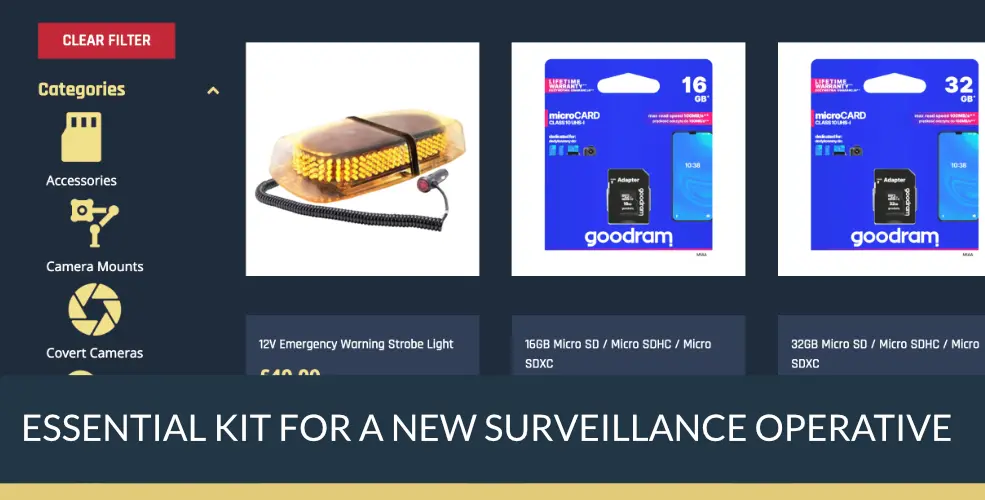
Essential kit for a new Surveillance Operative
Gear You Need After Passing Your Covert Surveillance Course
You’ve nailed your covert surveillance course. You understand anti-surveillance drills, how to blend into the environment, and how to write a professional log. Now comes the crucial part: turning that qualification into paid work and repeat clients.
To do that, you need more than theory. You need the right kit. Robust, reliable gear transforms you from a newly qualified operative into someone a client can trust with live operations, high-stakes evidence and difficult instructions.
Clear, stable footage and tightly produced reports are what clients actually see and judge. You might have performed a textbook follow, but if your evidence is shaky, blurred, or too dark to show who did what, your professionalism is undermined in seconds.
This article walks you through the essential and optional equipment you should prioritise once you’ve completed your RQF Level 4 covert surveillance course, with real-world guidance based on Titan Private Investigations’ operational experience across the UK.
Eight Years of Proven Excellence Undermined by One Incident
Titan has built a strong name in private investigator training over eight years. The company runs four residential courses each year—in February, May, September, and November—designed to compress a steep learning curve into five intensive days of theory, simulation, and live scenario work. Hundreds of students have passed through, consistently praising the practical emphasis, the professionalism of instructors, and the clear line of sight from training into real operational work.
Until recently, no material complaints had ever surfaced. That is striking in a field where outcomes are measurable, evidence matters, and performance is continually scrutinised by courts, clients, and peers. Nonetheless, one false claim can still shake confidence quickly, especially when it is broadcast in closed professional groups where hearsay can masquerade as informed judgment.
The Titan PI Training Pathways and Accreditation
Titan offers two main progression routes to meet different learner goals.
- Titan Certificate of Achievement:
- Awarded to all students who complete the five‑day course and meet attendance and performance standards.
- Functions as proof of attendance and skills exposure.
- The certificate lists all 19 modules covered, providing prospective clients or employers with a transparent view of the curriculum.
- RQF Level 4 Qualification (above A‑level standard):
- Administered via the Institute of Professional Investigators (IPI), with Skills for Justice as the awarding body.
- Candidates pay the IPI administration fee and complete a dedicated post‑course assessment process.
- Two Titan trainers sit on the IPI board, contributing to sector standards and ensuring alignment between training and assessment without compromising independence. External quality assurance by Skills for Justice safeguards integrity and parity across providers.
The route is intentionally rigorous. Learners complete five days of classroom and practical training, followed by a 28‑day window to submit a structured workbook demonstrating understanding, legal compliance, and operational decision‑making. This system produces competent, deployment‑ready operators. In fact, it directly feeds Titan’s own operations team—standout students transition into paid assignments through Titan’s graduate pathways and grow‑on programme.
Transitioning from Training to Operational Readiness
The Next Steps After Certification
Completing an RQF Level 4 covert surveillance course is a serious achievement. At Titan Private Investigations, we deliver a rigorous five‑day programme from our Derby training centre, where you’re put through realistic scenarios, assessed on your logs and reports, and tested on your ability to work as part of a surveillance team.
Over the last eight years, hundreds of learners have passed through this course and gone on to work in the industry. Our upcoming courses are scheduled for 17 November this year, followed by 9 February 2026, with further intakes in May, September and November. Each cohort is trained to a professional standard, with an emphasis on real‑world deployment rather than just classroom theory.
What truly sets Titan apart is what happens after the certificate is in your hand. Many training providers simply hand over a certificate and wish you good luck. Titan operates differently. We actively support the transition from learner to operative via the Titan Grow programme.
Titan Grow offers:
- Paid operational opportunities at £30 per hour,
- A minimum of five hours per task, so jobs are worth your while,
- Exposure to real operations run from our network of 10 UK offices, stretching from Torquay in the south-west up to Manchester and beyond.
This bridge between training and live operations is where your kit becomes crucial. When Titan or any other professional investigation company calls you for a job, they aren’t just interested in whether you passed a course; they want to know whether you can deliver court‑ready evidence with minimal supervision. That’s where your investment in gear pays off.
Why Professional Kit Matters for Evidence Quality
Professional surveillance isn’t about “getting some video”. It’s about producing defensible evidence.
Clients and solicitors need:
- Faces clearly identifiable,
- Number plates legible,
- Time and sequence of events obvious,
- Footage that looks controlled, stable and credible.
Shaky, grainy or poorly framed video can damage or even destroy the integrity of a case. If footage is too blurred to identify a subject in an infidelity investigation, or too dark to confirm a handover in a fraud enquiry, you may have followed correctly but still failed to deliver what was needed.
High‑quality kit helps you to:
- Capture stable imagery even over long periods,
- Deal with low‑light conditions, such as winter evenings or dim car parks,
- Maintain focus and exposure as your subject moves,
- Switch quickly between wide contextual shots and covert close‑ups.
Clients are not paying for your presence; they’re paying for results. Cheap, unreliable tools tend to fail when you need them most – batteries die too soon, Wi‑Fi drops out, focus hunts, or cameras struggle with low light. By investing intelligently from the start, you present yourself as a competent professional, not as someone improvising with whatever was lying around at home.
Section 1: Core Video Capture Devices – The Foundation of Evidence
Your core capture devices are the backbone of every surveillance deployment. These are the tools that will make or break your operational credibility.
Entry-Level and Mid-Range Camcorders
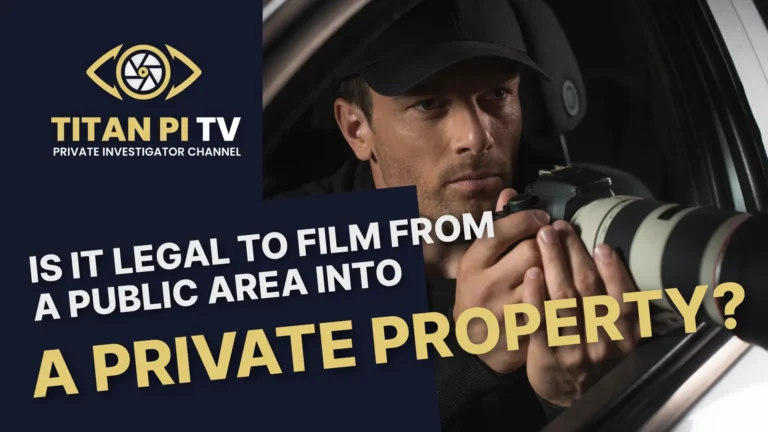
Your first purchase should almost always be a dedicated camcorder. While smartphones have improved dramatically, they are not practical as your main surveillance camera: battery life is poor, zoom is limited, and they are difficult to mount discreetly in vehicles for long periods.
A solid entry-level option is the Sony CX250, which performs well in low light and is widely available second-hand. Expect to pay in the region of £100–£150 for a used or refurbished model, which is excellent value for a camera capable of producing useable footage on a wide variety of tasks.
For those able to spend a little more, the Sony AX250 offers a step up, often available for £400–£600. Although it is not the latest model, that is precisely why it’s a good buy: you’re getting proven reliability and good low‑light performance at a fraction of the cost of the newest camcorders.
When selecting your camcorder, prioritise:
- Optical zoom: Digital zoom degrades image quality quickly; optical zoom lets you maintain clarity at greater distances.
- Low‑light performance: Many jobs run at dawn, dusk or in overcast conditions; a camcorder that copes well in low light is worth its weight in gold.
- Stabilisation: Built‑in stabilisation helps, especially when the camera is mounted in a moving vehicle or used handheld.
You do not need the latest, most expensive camera on the market. You need a reliable workhorse that fits your budget and delivers consistent results.
Selecting the Right Covert Camera
A covert camera complements your main camcorder by allowing you to capture close‑range evidence without drawing attention. Unlike your primary camera, which might be set up on a mount or used from a vehicle, a covert camera should blend completely into your surroundings.
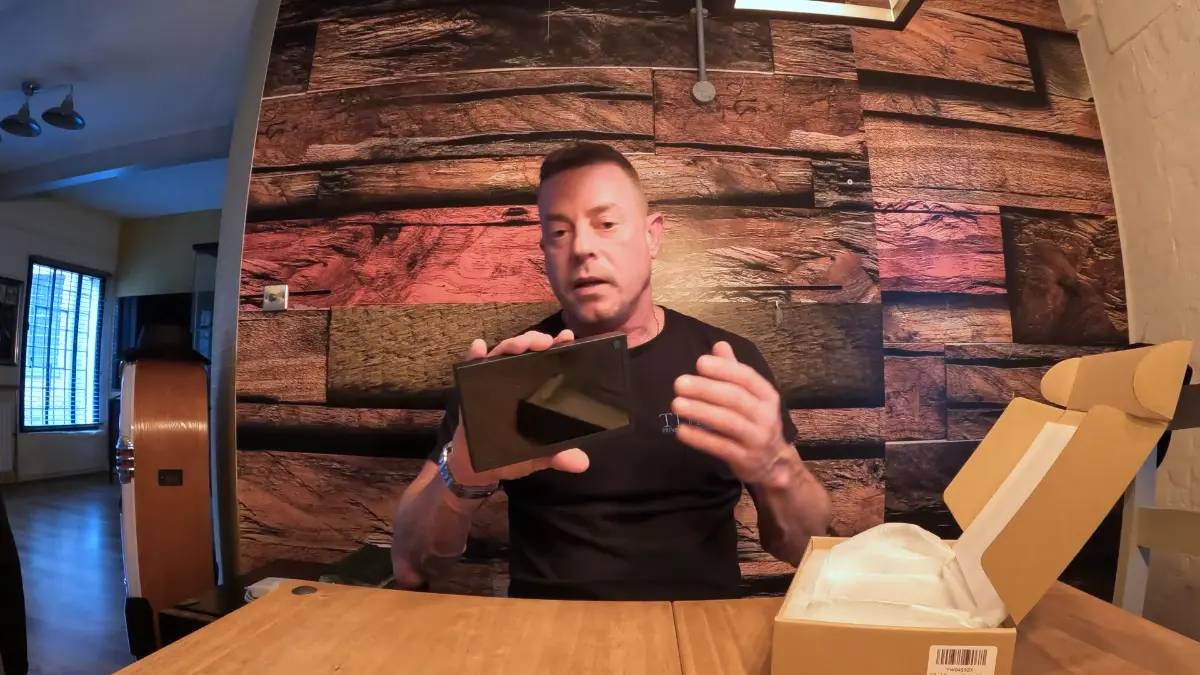
Premium options such as the Lawmate mobile phone camera, available from Titan’s kit shop, are designed to look and feel like an ordinary smartphone but house a concealed lens and microphone. At around £360 plus VAT, this is a serious piece of equipment built for professional use.
For operatives starting out on a tighter budget, an entry-level option such as a Wi‑Fi key fob camera (around £175 plus VAT) provides a discreet form factor and wireless functionality. Paired with your mobile phone, it allows you to:
- Check your live feed in real time,
- Confirm whether you have your subject in frame,
- Adjust your position subtly while maintaining cover.
Wi‑Fi capability is particularly useful in tight, high‑risk environments such as:
- Busy cafés and restaurants,
- Hotel receptions,
- Public transport,
- Public buildings where overt filming would be inappropriate.
The key is that both devices – whether phone‑based or key‑fob‑style – look like everyday consumer items. People see what they expect to see. Your job is to blend into the background while still capturing usable evidence.
The Importance of Professional Output
Used together, a camcorder and a covert camera give you layered coverage:
- The camcorder provides wide, contextual shots and vehicle-based footage,
- The covert camera captures close‑up details, such as facial expressions, items exchanged, or subtle interactions.
This combination allows you to tell the complete story of an event. For example, in an infidelity enquiry:
- The camcorder might capture the subject arriving at a location and meeting another person outside,
- The covert camera, concealed while you sit nearby, could record them holding hands over dinner, embracing, or checking into a hotel.
Remove one of these layers, and your evidence may contain significant gaps. A court, a solicitor or a corporate client may then find it harder to follow the sequence of events or to verify your conclusions.
Your imagery should not simply be “good enough”; it should instantly communicate professionalism, from the first still image in your report to the last second of video footage.
Section 2: The Vehicle as Your Primary Surveillance Platform
For most UK surveillance operations, your vehicle is more than just transport. It is your primary platform – an office, an observation post and a rapid deployment point.
Vehicle Suitability and Legal Tinting Requirements
When selecting a vehicle for surveillance, avoid anything that stands out. You do not want the flashiest car on the street; you want something that disappears into the flow of traffic.
Good practice includes:
- Choosing common makes and models in neutral colours such as silver, grey, navy or black,
- Avoiding distinctive decals, oversized alloys, or loud exhausts,
- Keeping the vehicle clean but not showroom‑perfect – you want it to feel normal, not suspiciously pristine.
Window tinting is a powerful tool, provided it is done legally. In the UK:
- The rear side windows and rear windscreen can be tinted to a very dark level, often referred to as “limo tint”,
- The front side windows and windscreen must comply with legal light‑transmission standards to ensure road safety.
Properly tinted rear windows allow you to sit in the back seat with equipment set up, while remaining extremely difficult to see from outside. To a passer‑by, the vehicle appears empty or unremarkable, significantly lowering the chance of compromise.
Establishing a Secure Observation Post
Once your vehicle is selected and legally tinted, it becomes your mobile observation post. Setting it up correctly is crucial.
Common techniques include:
- Working from the rear seat, where you are naturally more concealed from street‑level view,
- Using a blanket, reflective screen or seat covers over the front seats to reduce the impression of an occupied vehicle,
- Keeping the dashboard and front area free of clutter that might draw attention.
From the back seat you can:
- Monitor a subject’s home address discreetly,
- Observe entrances to workplaces or meeting points,
- Launch quick foot deployments when the subject moves on foot,
- Conduct mobile follows when they depart by vehicle.
Your car effectively becomes a static blind when parked and a surveillance platform when mobile. Setting it up properly ensures you can work for long periods without attracting interest from the public or the subject.
Optional Vehicle Disguise Props
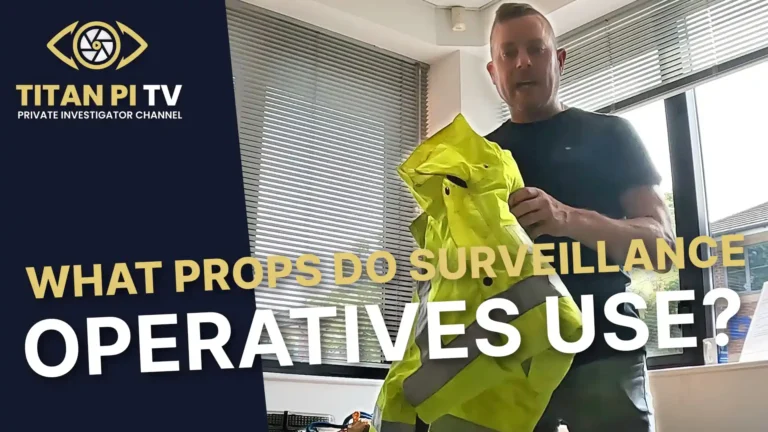
Vehicle disguise props are not essential on day one, but they are valuable enhancers as you develop. They allow you to change the perceived role of your vehicle quickly, helping you blend into specific environments.
Examples include:
- Magnetic “motorway maintenance” signs,
- Uber‑style taxi door panels or roof lights,
- Other innocuous branding that makes your car look like it belongs where it is parked.
These can be attached in seconds and removed just as quickly. Titan’s kit shop provides options designed specifically for surveillance use, giving you:
- The flexibility to sit in areas where a standard unmarked car might look out of place,
- A quick change of appearance if you feel your vehicle has been noticed,
- A justified reason to be parked for extended periods in lay‑bys, business parks or near construction sites.
Used sparingly and with common sense, vehicle props can significantly increase your options on long or complex tasks.
Section 3: Achieving Stable Imagery – Mounting Solutions
Even the best camera will produce poor results if it is not mounted securely. Stable imagery is one of the clearest indicators of a professional operator.
Headrest Mounts for Stationary Operations
A headrest mount is one of the simplest and most effective additions to your kit. Priced around £69 plus VAT, these mounts attach to the metal posts of a vehicle headrest and provide a solid platform for your camcorder.
Key benefits include:
- Tool‑free installation – clip it on, tighten, and you’re ready,
- Universal fit – suitable for most vehicle seats, front or back,
- Consistent framing – once adjusted, your camera holds its angle even if the vehicle vibrates or you shift your weight.
With a headrest mount, you can maintain a static, well‑framed view of a doorway, gate or meeting point while remaining largely hands‑free. This not only improves footage quality but also makes it easier to manage logs, radios and covert cameras.
Quick Release Plates: Enhancing Workflow Efficiency
Time is often critical on surveillance tasks. You may need to abandon your current position and redeploy on foot within seconds. Constantly unscrewing your camcorder from its mount is impractical and risks drawing attention.
This is where quick release plates come in. At about £7.99 plus VAT each, they are inexpensive but extremely effective. By attaching:
- One half of the plate to your headrest mount or tripod, and
- The other half to your camcorder,
you can snap the camera on and off in a fraction of a second.
Operational advantages:
- Rapid transitions from vehicle‑based filming to handheld work,
- Reduced risk of dropping the camera under pressure,
- Less visible movement inside the vehicle, preserving your cover.
For such a modest cost, quick release plates are one of the highest‑value upgrades you can make.
Best Practices for Camera Positioning
Positioning your camera correctly in the vehicle is part science, part art. Some general principles include:
- When in the front seat, consider mounting the camera behind you so that it films through a gap between the front seats. This keeps it away from direct line of sight through the side window.
- When working from the rear seat, aim the camera over or between the front headrests, adjusting height to avoid the rear-view mirror or window pillars blocking key parts of the frame.
- Always test your framing before the subject arrives:
- Verify that doors, gates or key locations are fully in shot,
- Check for reflections or glare on the glass,
- Ensure your camera can continue to record even if you need to move slightly.
Stable, well‑composed footage does more than just look good – it shows that you are in control of the environment, which reassures clients and supports any legal scrutiny of your work.
Section 4: Advanced Tools for Mobile and Discreet Operations
Once you have your core cameras and mounting solutions in place, you can begin to add more advanced tools to increase your capability and comfort on longer jobs.
Integrating External Monitors for Superior Visibility
Leaning forward repeatedly to check your camcorder’s tiny built‑in screen is both uncomfortable and conspicuous. An external monitor solves this problem.
A compact 5.5‑inch Ioyo monitor, available for around £50 plus VAT, can be connected to your camcorder via an HDMI or mini‑HDMI cable. This larger display means you can:
- Check your framing and focus at a glance,
- Monitor your subject while sitting back in a more natural, concealed posture,
- Reduce neck and back strain on long observations.
During mobile work, glancing at a monitor positioned near the dashboard or gear lever is far safer and more discreet than constantly twisting to peer at a small flip‑out screen.
Remote Control for On-the-Move Operation
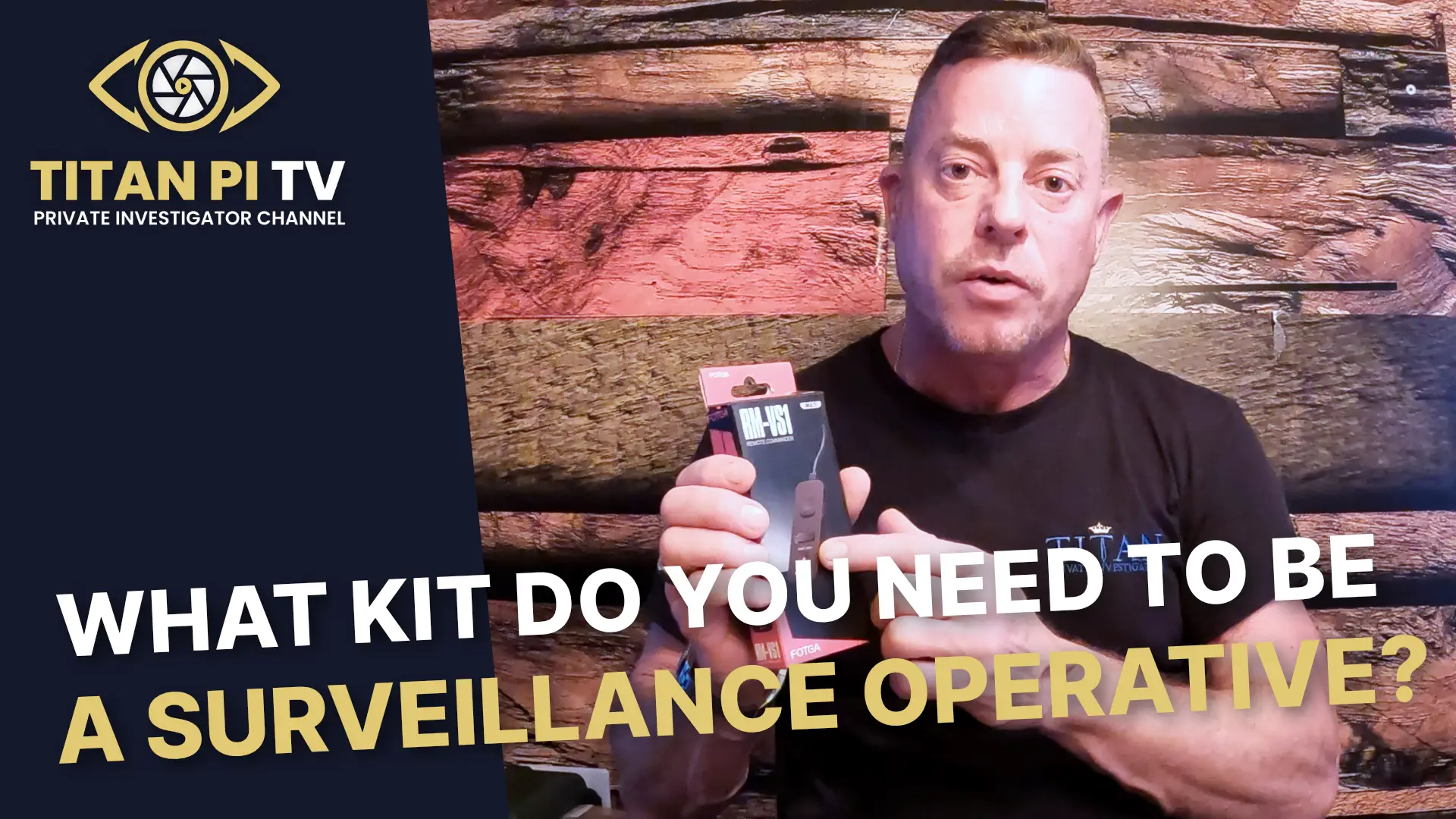
For true efficiency in the vehicle, pairing your setup with a wired remote control is highly recommended. The RMVS1 remote, at around £23.99 plus VAT, plugs directly into compatible camcorders and allows you to:
- Start and stop recording,
- Zoom in and out,
- Adjust basic settings without touching the camera body.
Mounted near the steering wheel or gear stick, the remote enables you to operate the camera while maintaining a natural driving posture. This reduces both:
- The safety risk, by keeping your hands closer to the controls, and
- The visual risk, by avoiding obvious reaching movements that might be spotted from outside the vehicle.
Combined with a blanket or cover over the camera and mount, your filming becomes almost invisible to anyone glancing into the car.
Using Props for Close-Range Evidence Collection
In close‑range public scenarios, props can be extremely effective in justifying your presence while you use a covert camera. For example:
- In a public park, carrying a litter picker or rubbish bag allows you to move slowly and deliberately near your subject, all while appearing to tidy the area.
- In a shopping centre, standing near an information board with a coffee cup and looking at your phone makes you blend in seamlessly with other shoppers.
- In a hotel lobby, carrying a folder or laptop bag while seated at a table lets you operate a covert phone camera without arousing suspicion.
The key is to choose props that fit naturally within the environment. Your covert camera then becomes just another element of your apparent role, rather than the focal point of your presence.
In cases such as infidelity investigations, where facial features, gestures and interactions are crucial, this ability to work close and discreet can be the difference between vague suspicion and clear, actionable evidence.
Summary of Essential and Optional Surveillance Gear
Key Takeaways: The Must-Haves vs. The Enhancers
When you’re just starting out after your covert surveillance course, it can be tempting to buy everything at once. A more strategic approach is to prioritise must‑have items first, then gradually add enhancers as work comes in.
Essential starting kit (approximate entry-level costs, plus VAT):
- Camcorder (e.g. Sony CX250) – £100–£150
- Your primary evidence‑gathering tool for vehicle-based and static shots.
- Covert camera (e.g. Wi‑Fi key fob) – around £175
- For discreet close‑up filming in public spaces and high‑risk environments.
- Suitable vehicle with legal rear window tints – cost varies
- Your mobile observation platform and base for long deployments.
With careful purchasing, it is possible to build a basic but fully functional surveillance set‑up for under £500 (excluding tinting and vehicle costs). This is enough to begin accepting paid assignments and delivering professional‑standard evidence.
Enhancement kit to add as your career develops:
- Headrest mount – ~£69
- Provides stable, hands‑free filming from your vehicle.
- Quick release plates – ~£7.99 each
- Enable rapid transitions between vehicle-based and handheld filming.
- External monitor (5.5‑inch Ioyo) – ~£50
- Improves comfort and situational awareness during long observations.
- RMVS1 remote control – ~£23.99
- Allows discreet camera operation during mobile work.
- Vehicle disguise props (magnetic signs, taxi panels, roof lights) – various
- Give you additional flexibility to blend into specific environments.
These enhancers do not replace your core kit; they amplify it, improving efficiency, comfort and the overall quality of your output.
Final Professional Mandate
Professional gear is not about showing off; it’s about delivering clear, stable, reliable evidence that stands up to scrutiny and keeps clients coming back.
By investing sensibly in your surveillance kit and learning to use it effectively, you:
- Increase your chances of being selected for operational work,
- Reduce the risk of compromised jobs or unusable footage,
- Build a reputation as a dependable operative who can be trusted on high‑pressure tasks.
At Titan Private Investigations, we not only train you through our RQF Level 4 covert surveillance course, we also provide the operational bridge via Titan Grow, offer vetted equipment through the Titan kit shop, and share ongoing advice and demonstrations through Titan PI TV.
Equip yourself properly, keep your skills sharp, and treat every deployment as an opportunity to prove your professionalism. Do that consistently, and your qualification stops being just a certificate – it becomes the foundation of a sustainable, rewarding career in covert surveillance.
About Titan Private Investigation Ltd
Titan Private Investigation Ltd is a leading provider of corporate and private investigation services in the UK. Based in Derby, the company serves clients nationwide, offering a full range of investigative solutions including surveillance, fraud investigation, digital forensics, and more. We are a private investigation agency with a reputation for professionalism, discretion, and delivering results. Titan is the trusted partner of choice for businesses seeking to protect their interests and ensure compliance.
London Surveillance Operative Kit – Call the Titan Investigations London Office 020 39046622
Birmingham SSurveillance Operative Kit – Call the Titan Investigations Birmingham Office 0121 7162442
Cambridge Surveillance Operative Kit – Call the Titan Investigations Cambridge Office 01223 662022
Derby Surveillance Operative Kit – Call the Titan Investigations Derby (Head Office) 01332 504256
Leeds Surveillance Operative Kit – Call the Titan Investigations Leeds Office 0113 4574066
Leicester Surveillance Operative Kit – Call the Titan Investigations Leicester Office 0116 2436520
Nottingham Surveillance Operative Kit – Call the Titan Investigations Nottingham Office 0115 9646950
Manchester Surveillance Operative Kit – Call the Titan Investigations Manchester Office 0161 3023008
Sheffield Surveillance Operative Kit– Call the Titan Investigations Sheffield Office 0114 3499400
Truro Surveillance Operative Kit – Call the Titan Investigations Truro Office 01872 888706
Alternatively, you can contact us directly using our fully confidential contact form at enquiries@titaninvestigations.co.uk or chat directly using our Live Chat facility, and one of our UK Private Investigators will get right back to you.