How Not to Take Covert Footage
Titan lifts the lid on covert filming failures, using a high-profile football “Spygate” example to highlight the real-world cost of amateur tradecraft.
Titan PI TV is back for another Friday episode, and host Simon Henson – Managing Director of Titan Private Investigation Limited – doesn’t waste time getting to the point. This week’s instalment, titled “How not to take covert footage”, is a brisk, cautionary look at what happens when people attempt surveillance without the right equipment, planning, or professional discipline.
Broadcast from Titan’s base in Derby, Simon frames the show as an insight into the “inside workings” of a live operational investigation agency. Titan, he reminds viewers, is not a single-location outfit: the company operates across the country with 10 offices, stretching from Truro in the south-west to Manchester in the north-west. For those who prefer audio, Simon also notes that Titan PI TV is available as a podcast “wherever you download your podcasts”.
But the heart of this episode isn’t about Titan’s footprint – it’s about the risks of getting covert footage wrong. And Simon Henson’s message is direct: if you’re going to do it, do it properly – because the consequences of being caught can dwarf any perceived short-term advantage.
The cautionary headline: when “covert” footage isn’t covert at all
To illustrate what not to do, Simon turns to a recent headline-making example from football. In the episode, he references a “major Spygate scandal” involving Southampton Football Club, describing how an analyst – named in the programme as William Salt – was allegedly caught taking what was meant to be covert mobile phone footage of Middlesbrough at their training ground.
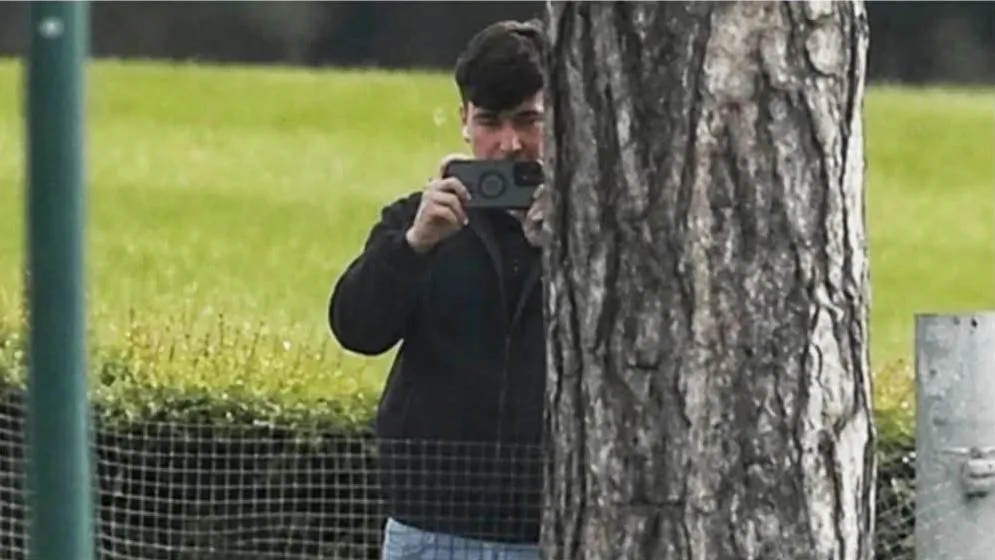
According to Simon’s account, the filming was intended to capture “closed tactics” – an attempt to gain an edge by illicitly monitoring opponents. He adds that similar activity was also alleged in relation to Oxford United and Ipswich Town.
The precise facts, outcomes, and disciplinary findings around any such incident are ultimately matters for the relevant authorities and governing bodies. However, the wider lesson Simon draws is one that applies far beyond sport: the moment you’re spotted, challenged, photographed, or reported, your entire operation collapses.
In his telling, the fallout for Southampton is a stark demonstration of reputational damage meeting financial reality. He claims the scandal contributed to the club losing its shot at a play-off final – a route he values at a minimum of £110 million. Whether one accepts that figure or not, the principle is clear: in high-stakes environments, a single avoidable mistake can become enormously expensive.
“If you used Titan… that’s what you’d get: absolutely nothing”
Simon’s sharpest point arrives when he discusses the image circulating of the alleged filmer. In the episode, he effectively argues that the most “damning” part of a covert filming scandal is not the footage itself – it’s the visibility of the person taking it.
“If you used Titan to take the covert footage,” Simon says, “that’s what you’d get. Absolutely nothing.”
It’s a line designed to land with a thud. His meaning: a professional operative should not be providing anyone with a clear, publishable photo opportunity — because they should not be obvious in the first place. Covert work, by definition, depends on blending in, managing angles, controlling exposure (in the operational sense), and avoiding behaviour that draws attention.
To make the contrast concrete, he outlines the kinds of tools and methods Titan says it deploys to reduce the chances of detection.
Covert options: everyday objects, fixed cameras, and remote monitoring
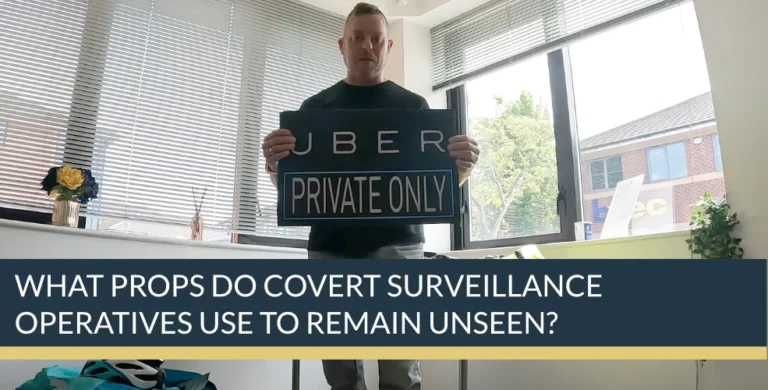
In the episode, Simon explains that Titan operatives have “covert options” — items designed to look like ordinary objects but built to capture audio and video discreetly.
He describes devices that appear to be a normal mobile phone or key fob, and even everyday carry items such as a Filofax, a coffee cup, or a bottle of water. The repeated emphasis is not on gimmickry, but on plausibility: the best covert device is one nobody would think twice about seeing in public.
He also discusses the use of drop-down/fixed cameras positioned so that the monitoring is conducted remotely – meaning you avoid the classic failure mode he mocks: someone “chimping from behind a tree with a mobile phone” held in landscape, visibly filming. In other words, if the act of filming itself is observable, the operation is already compromised.
Simon briefly mentions drones as another option, though he keeps the discussion at a high level. The underlying message remains the same across every method: professionalism is not simply about owning equipment; it’s about deploying it in a way that does not create an obvious human “tell”.
The cost argument: pennies compared with consequences
A key feature of this episode is that it isn’t only a critique – it’s also a pricing reality check aimed at businesses and decision-makers who might be tempted to “handle it internally”.
Simon contrasts the claimed £110 million cost of fallout in the Southampton example with the comparatively modest fees he cites for professional work:
- Fixed camera deployment at “about £120 per day” (with the example of running footage for seven days).
- Operatives at “£60 an hour plus VAT each”, with a minimum of two operatives and a minimum of five hours – which he summarises as “£720” for that minimum deployment.
The figures are presented to support a wider point: organisations often gamble to “save money” by improvising surveillance, only to expose themselves to far greater losses when the attempt becomes public, triggers complaints, or creates legal and reputational repercussions.
Why businesses shouldn’t DIY covert filming
One of the most relatable moments in the episode comes when Simon steps away from football and talks about a scenario many employers will recognise.
Imagine, he says, an employee is off sick – but you suspect they may be working elsewhere. Would you send a member of your HR team out to gather covert mobile phone footage?
His answer: no, you wouldn’t. Not only because it’s outside their role and training, but because the stakes are high: employment disputes can escalate quickly, evidence can be challenged, and mishandled surveillance can backfire. The implication is that amateur filming doesn’t just risk being “noticed”; it risks undermining the very case you’re trying to build.
Here, the episode’s title becomes more than a catchy hook. “How not to take covert footage” is, in practice, a warning against:
- Untrained staff conducting sensitive tasks.
- Obvious filming behaviour that attracts attention.
- Poor operational planning that leads to identification.
- False economy thinking where “free” footage becomes the most expensive option.
A professional reminder: discretion, legality, and accountability
While Simon’s tone is lively — and at times deliberately blunt — the episode repeatedly circles back to a serious professional premise: covert work must be approached with care.
In any UK context, surveillance and recording can quickly intersect with privacy expectations, data handling, and evidential standards. Even when people believe they are “just recording what’s there”, the way footage is gathered, stored, and used can matter enormously. Simons answer is not to encourage viewers to be more cunning; it is to encourage them to be more responsible: use professionals and avoid creating avoidable risk.
The call to action: “Don’t get caught out”
Simon closes with a straightforward message: if you need covert footage, call the professionals. He directs viewers to Titan’s website – titaninvestigations.co.uk – and signs off in typical Titan PI TV fashion, asking for a thumbs up, encouraging viewers to subscribe, and promising more next Friday.
For anyone watching from the business side — whether you’re a club, a company, or an individual facing a high-stakes issue – the episode’s takeaway is hard to ignore: covert footage that attracts attention is not covert footage at all. And once the story becomes public, you’re no longer in control of the narrative, the cost, or the consequences.
What’s Next on Titan PI TV?
Titan PI TV continues to grow steadily, with over 3,600 subscribers and counting – a testament to the appetite for straight-talking guidance in a complex field. If you found Simon’s insights useful, subscribe to the channel to catch future episodes. New content drops every Friday at 3:00 pm, offering grounded advice for investigators, agency owners, and professionals who work with them.
Thank you for reading, watching, or listening to this week’s blog post on Titan PI TV. For more expert advice and behind-the-scenes insights, subscribe to Titan PI TV on YouTube or download the Titan PI TV podcast wherever you get your podcasts. If you found this information helpful, please give us a thumbs up and subscribe to our channel. Stay tuned for more insights into the world of private investigations. Until next time, stay safe and keep learning!
Titan PI TV: Uncovering the Truth, One Investigation at a Time.