What Are the Similarities Between the Manchineel Tree and Employee Absenteeism?
How a Caribbean tree infamous for its hidden toxicity mirrors one of the most damaging and misunderstood problems facing British employers today.
The comparison sounds odd at first. One is a tree found in the Caribbean, infamous for being one of the most dangerous plants in the world. The other is a workplace issue that costs employers time, money and trust. But the link is actually very simple. Both can look harmless on the surface while causing serious damage underneath. That is exactly why absenteeism can be such a toxic problem for a business. It is not always what it first appears to be, and when concerns arise, employers need facts, not guesswork.
The Manchineel Tree: Beautiful, Inviting and Highly Toxic
The Manchineel tree, found across the Caribbean coastline and parts of Central America, has been described by Guinness World Records as the deadliest tree in the world. It does not look like a threat. In fact, it produces an attractive fruit known as the beach apple — a small, round, greenish-yellow fruit that resembles a crab apple and, by all appearances, seems perfectly innocent. The trouble is that appearances are dangerously misleading.
The fruit may taste sweet at first, but eating it can cause immediate burning and swelling of the throat, severe gastrointestinal distress, and in some cases may even prove fatal. The danger does not stop there. The tree gives off a milky white sap from its trunk and branches, and that sap can blister skin almost instantly wherever it makes contact. Standing beneath the tree during rainfall is enough to cause chemical burns, as the water washes the sap from the leaves onto anyone sheltering below. Even burning the wood releases toxic smoke capable of causing temporary blindness and severe respiratory irritation.
So you have something that looks ordinary, even appealing, while being deeply poisonous at every level. The Manchineel does not announce its danger. It simply exists, looking benign, while the harm it causes accumulates quietly and sometimes catastrophically. That is precisely where the comparison with workplace absenteeism begins.
The Scale of the Problem: What Absenteeism Really Costs UK Employers
Before examining the investigative process, it is worth understanding the scale of the challenge. Workplace absenteeism is not a minor inconvenience. According to data from the Chartered Institute of Personnel and Development (CIPD), the average UK employee takes approximately 5.6 days off sick per year. Across a workforce of even modest size, that figure accumulates rapidly into a significant operational and financial burden.
The direct costs are obvious: sick pay, temporary cover, lost productivity and disruption to project timelines. But the indirect costs are often far greater. When colleagues must absorb the workload of an absent employee, morale suffers. Resentment builds, particularly when staff suspect that an absence is not entirely genuine. Management time is consumed by administration, return-to-work interviews and HR processes. Client relationships can be strained when key personnel are unavailable. And if the absence is prolonged or recurring, the business may face difficult decisions about capability, dismissal or legal proceedings — all of which carry their own costs and risks.
The financial impact across the UK economy runs into billions of pounds annually. For individual businesses, particularly small and medium-sized enterprises, a single case of fraudulent or exaggerated long-term absence can have a disproportionate effect on operations. This is not a problem that resolves itself. Like the Manchineel tree, the damage compounds quietly over time.
Why Absenteeism Can Be Toxic for Employers
Absenteeism is not automatically suspicious. There are many perfectly genuine cases where an employee is unwell, injured or otherwise unable to work. Sometimes there has been an accident at work and there is no dispute that something happened. Employers have a duty of care, and that duty includes treating genuine illness with compassion and appropriate support.
But that is not always the full story. The key question for an employer is often this: are the effects of that illness or accident really preventing the employee from working in the way they claim? That is where absenteeism becomes a serious issue. If someone says they cannot carry out certain tasks, but their actions tell a very different story, the business may be dealing with a toxic situation that damages operations, morale and trust.
Like the Manchineel tree, the danger is not always obvious at first glance. An employee may present a doctor’s note, communicate politely and appear to be following the correct procedures. On the surface, everything looks as it should. Beneath that surface, however, the reality may be quite different. They may be working for a competitor. They may be undertaking physical activity that directly contradicts their stated medical condition. They may be exaggerating symptoms to extend a period of paid leave. The employer, without evidence, is left in an impossible position — unable to act fairly without proof, yet unable to ignore a situation that is causing real harm.
What an Absenteeism Investigation Is Designed to Uncover
When concerns exist around sickness absence, the goal of a professional investigation is not to make assumptions or to build a case against an employee regardless of the facts. The goal is to establish what is actually happening. A structured absenteeism investigation focuses on the facts of an employee’s daily activity during the time they are meant to be unfit for work.
That can include questions such as:
- Is the employee working somewhere else whilst signed off sick?
- Are they carrying out physical activity they claim they cannot do?
- Are they behaving in a way that contradicts their stated condition or restrictions?
- Is the absence genuine, exaggerated or potentially fraudulent?
These are not questions that should be answered by rumour, office gossip or hunches. They need evidence — lawfully obtained, professionally documented and capable of withstanding scrutiny. That is precisely what a professional investigation is designed to provide.
It is also worth noting that an investigation may ultimately confirm that the absence is entirely genuine. That outcome is equally valuable. It allows the employer to move forward with confidence, provide appropriate support and close the matter without the lingering uncertainty that so often damages working relationships. Evidence-based clarity benefits everyone involved.
How Workplace Surveillance for Absenteeism Works
In an absenteeism case, surveillance is typically carried out during the employee’s contracted working hours. That might be a standard nine to five. It could be eight to four, six to two, or any other agreed working pattern. The point is to assess what the individual is doing during the period they would normally be expected to be at work and during which they are receiving sick pay or other benefits as a result of their stated inability to work.
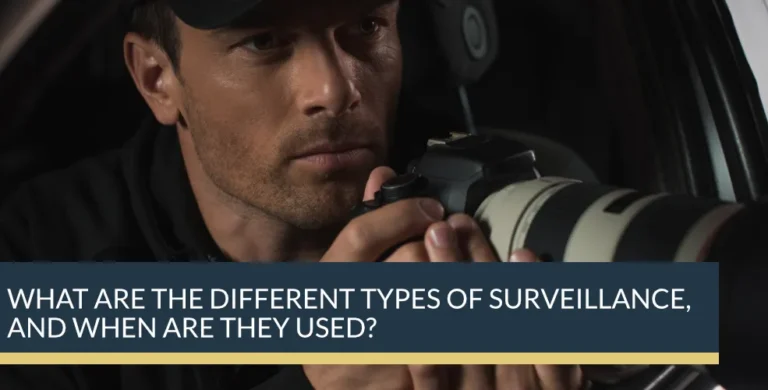
A professional investigation may involve two to three surveillance operatives deployed to monitor the subject and accurately document their movements and activities. The use of multiple operatives is important. It allows for continuous coverage if the subject moves between locations, reduces the risk of detection, and ensures that the evidence gathered is corroborated by more than one professional observer.
The purpose is straightforward:
- Observe the individual during their contracted working hours.
- Record what they are doing, where they are going and who they are meeting.
- Establish whether their conduct matches the reason given for their absence.
- Provide the employer with a clear, factual and documented account of findings.
That evidence may show the absence is entirely genuine. Equally, it may reveal a very different picture — one that gives the employer the foundation they need to take appropriate action.
One Day May Be Enough — But Sometimes It Takes More
Not every case requires a long-running operation. Sometimes everything needed becomes clear on the first day of deployment. If the evidence is strong, direct and conclusive — for example, if an employee claiming to be housebound due to a back injury is observed carrying out heavy manual work or engaging in vigorous physical activity — the employer may quickly get the answers they need.
In other situations, one day is not enough. There may need to be multiple deployments to show a pattern of behaviour and to avoid the argument that the individual was simply having a particularly good day. That distinction matters enormously, particularly if the matter is likely to progress into a formal internal process or legal proceedings.
A single snapshot can be useful. A repeated pattern is often far stronger. Courts and employment tribunals are more likely to give significant weight to evidence that demonstrates consistent behaviour over time, rather than a single isolated observation. The decision about how many days of surveillance are appropriate will depend on the specific circumstances of each case, and a professional investigator will advise on this at the outset.
The Importance of Lawfully Obtained Evidence
One of the most important points in any private investigation is that the evidence must be lawfully obtained. This is not a technical footnote or a procedural formality. It is central to whether the evidence is actually useful and whether the employer can rely upon it without exposing themselves to further legal risk.
Professional investigators operate within the framework of UK law, including the Regulation of Investigatory Powers Act, the Data Protection Act 2018 and the UK General Data Protection Regulation. Surveillance is conducted in public spaces and in accordance with established legal principles. The subject’s reasonable expectation of privacy is respected throughout, and the investigation is proportionate to the legitimate aim being pursued.
When surveillance has been conducted lawfully, the material gathered may be relied upon in:
- Employment tribunal proceedings.
- Civil court proceedings.
- Criminal court proceedings, where fraud or deception is alleged.
That gives employers something far more valuable than suspicion. It gives them evidence they can act on — evidence that has been gathered professionally, documented accurately and presented in a format that withstands legal scrutiny. A proper investigation should result in a detailed written report setting out exactly what was observed, when it was observed, by whom and why it is relevant to the matter in question.
What an Employer Gains from an Absenteeism Investigation
When absenteeism is affecting a business, uncertainty is often the biggest problem. Employers may feel strongly that something is not right, but they do not want to act unfairly, expose themselves to an unfair dismissal claim or make a decision they cannot defend. That uncertainty is paralysing. It allows the situation to continue, the costs to mount and the damage to spread.
A structured, lawful investigation helps replace uncertainty with clarity. That clarity can help an employer:
- Understand whether the absence is genuine and act accordingly.
- Protect the business from abuse of sick leave policies.
- Make informed HR and disciplinary decisions based on evidence rather than suspicion.
- Prepare evidence for tribunal or court proceedings if required.
- Respond proportionately and professionally rather than emotionally or reactively.
- Demonstrate to the wider workforce that concerns are taken seriously and handled fairly.
That last point deserves particular attention. When employees observe that a colleague appears to be abusing the system without consequence, it sends a damaging message throughout the organisation. It erodes confidence in management, breeds resentment among those who attend work conscientiously and can even encourage others to test the boundaries of what they believe they can get away with. A professional investigation, handled discreetly and lawfully, demonstrates that the business takes its responsibilities seriously — both to its employees and to itself.
Absenteeism Is Not Always What It Seems
This is really the heart of the comparison. The Manchineel tree looks benign. Its fruit looks attractive and inviting. Yet contact with it can cause real, lasting and sometimes irreversible harm. Absenteeism can work in much the same way. On paper, an absence may appear entirely straightforward — a medical certificate, a polite message, a plausible explanation. But in some cases, beneath the explanation given, there may be dishonesty, exaggeration or competing work activity that the employer knows nothing about.
That hidden toxicity can spread through a workplace quickly. It affects productivity. It puts pressure on other members of staff who must cover additional responsibilities. It can undermine confidence in management if obvious concerns are ignored or handled without rigour. And if left unchecked, it may create the impression that abuse of the system carries no real consequences — an impression that, once established, is very difficult to reverse.
The comparison with the Manchineel tree is apt precisely because the danger is not always visible. The tree does not warn you. It does not look threatening. It simply causes harm to those who do not know what they are dealing with. Employers who lack the tools or the evidence to identify and address fraudulent or exaggerated absence are in a similar position — exposed to harm they may not fully recognise until the damage is already done.
When to Consider Professional Help
If you suspect that an employee’s absence does not match their real-world activity, it may be time to seek professional support. That does not mean treating every absence as fraudulent or approaching the matter with hostility. It means that when there is a legitimate and reasonable concern, the best response is a lawful, evidence-based one — not a reactive or emotional one.
Professional surveillance operatives can establish what is taking place during the employee’s contracted working day and provide a documented report of their findings. That report gives the employer a clear factual foundation from which to make decisions — whether that means providing additional support to a genuinely unwell employee, initiating a disciplinary process, or referring the matter to legal advisers.
At Titan Private Investigation Ltd, our team of experienced operatives conducts absenteeism investigations with professionalism, discretion and strict adherence to UK law. We understand the sensitivity of these matters and the importance of handling them in a way that protects both the employer and the integrity of any subsequent proceedings. Every investigation is tailored to the specific circumstances of the case, and our clients receive a comprehensive written report upon conclusion.
We work with businesses of all sizes, from sole traders and small enterprises to large organisations with complex HR structures. Whatever the scale of the concern, our approach remains the same: gather the facts, document them accurately and present them clearly so that our clients can act with confidence.
Employee Absenteeism: Final Thoughts
The lesson from the Manchineel tree is simple: do not judge risk by appearance alone. What looks harmless may not be. What appears straightforward may conceal something far more damaging. The same principle applies directly to workplace absenteeism.
Sometimes a situation is exactly as presented. Sometimes it is not. The only reliable way to know the difference is to gather lawful evidence, assess the facts objectively and act on what is really there — not on what you hope or fear might be the case.
That is how you deal with toxic problems properly: with professionalism, with evidence and with the clarity that only a thorough investigation can provide. Before they do more damage than they first appear capable of causing.
About Titan Private Investigation Ltd
Titan Private Investigation Ltd is a leading provider of corporate and private investigation services in the UK. Based in Derby, the company serves clients nationwide, offering a full range of investigative solutions including surveillance, fraud investigation, digital forensics, and more. We are a private investigation agency with a reputation for professionalism, discretion, and delivering results. Titan is the trusted partner of choice for businesses seeking to protect their interests and ensure compliance.
London Employee Absenteeism Investigations – Call the Titan Investigations London Office 020 39046622
Birmingham Employee Absenteeism Investigations – Call the Titan Investigations Birmingham Office 0121 7162442
Cambridge Employee Absenteeism Investigations– Call the Titan Investigations Cambridge Office 01223 662022
Derby Employee Absenteeism Investigations – Call the Titan Investigations Derby (Head Office) 01332 504256
Leeds Employee Absenteeism Investigations– Call the Titan Investigations Leeds Office 0113 4574066
Leicester Employee Absenteeism Investigations – Call the Titan Investigations Leicester Office 0116 2436520
Nottingham Employee Absenteeism Investigations – Call the Titan Investigations Nottingham Office 0115 9646950
Manchester Employee Absenteeism Investigations– Call the Titan Investigations Manchester Office 0161 3023008
Sheffield Employee Absenteeism Investigations – Call the Titan Investigations Sheffield Office 0114 3499400
Truro Employee Absenteeism Investigations – Call the Titan Investigations Truro Office 01872 888706
Alternatively, you can contact us directly using our fully confidential contact form at enquiries@titaninvestigations.co.uk or chat directly using our Live Chat facility, and one of our UK Private Investigators will get right back to you.