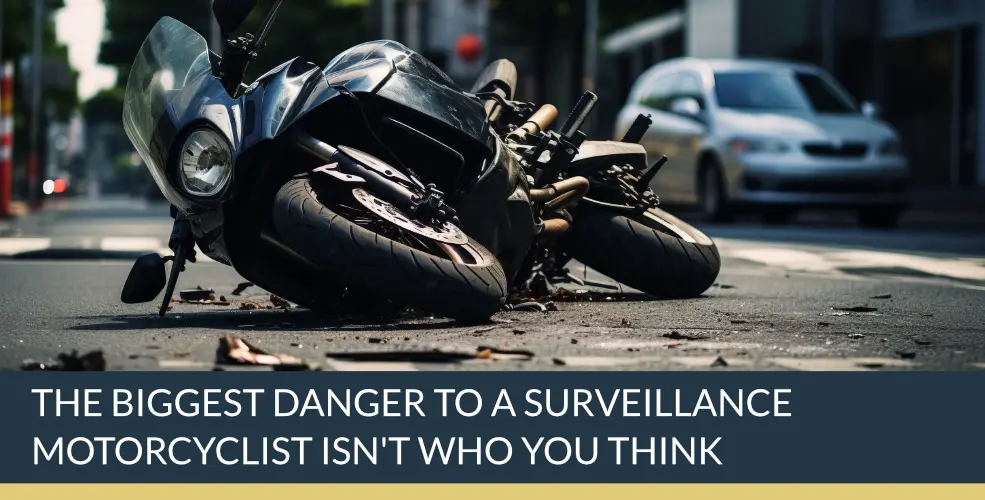
The Biggest Danger to a Surveillance Motorcyclist Isn’t Who You Think
The insiders guide to the risks and dangers to a Surveillance Motorcyclist
When people think about the risks facing a surveillance motorcyclist, their minds go to the obvious: the subject being followed, unpredictable members of the public, or the inherent dangers of riding in fast-moving operational conditions.
Those risks are real. But they are rarely the most dangerous factor on the ground.
In professional surveillance operations, the greatest threat to a surveillance motorcyclist is usually the team around them.
Why the Surveillance Team Itself Creates the Risk
A surveillance motorcyclist is deployed because they offer something no other asset can match. They can make ground quickly, move through traffic, recover position, and take the eyeball when the convoy begins to stretch or fragment, all without arousing suspicion.
That agility is precisely what makes the role so valuable. It is also what makes it dangerous.
The biker is never static. They are constantly repositioning, moving up, dropping back, pushing through, in direct response to live commentary. If the rest of the team is not fully switched on to where the bike is likely to be, the risk of a serious internal collision rises sharply.
Danger does not arrive evenly across an operation. It tends to spike at predictable points:
The High-Risk Moments Every Surveillance Operative Must Know
- At a loss of sight of the subject
- At junctions and crossroads
- At traffic lights, especially stale greens
- When the convoy fragments or stretches
- When the biker is ordered to make ground or come through
These are the exact moments when pressure builds, decision-making deteriorates, and team discipline is most likely to slip. A rushed turn without a mirror check, a lane change without a shoulder check, that is all it takes.
What Happens at a Total Loss
A total loss is one of the highest-risk situations in vehicle surveillance, and it is where the biker is most likely to be in danger from their own colleagues.
When the subject vehicle disappears and the team reaches a crossroads with no intelligence to indicate which route was taken, a structured response is critical:
- The eyeball vehicle calls the total loss
- The motorcyclist stays with the eyeball vehicle
- The backup vehicle takes one available route
- The third vehicle takes the other
On paper, this is clean and procedural. In live operational conditions, urgency kicks in fast.
Red Mist: The Real Threat in Surveillance Work
Experienced surveillance operatives will recognise the term red mist, that moment when the pressure to recover the subject overrides disciplined thinking.
A driver in the third vehicle, rushing to take the offside route at a crossroads, may cut across without mirrors, without a shoulder check, and without any thought that the surveillance biker may already be making ground from the rear.
That lapse of only a second can put the motorcyclist in serious danger.
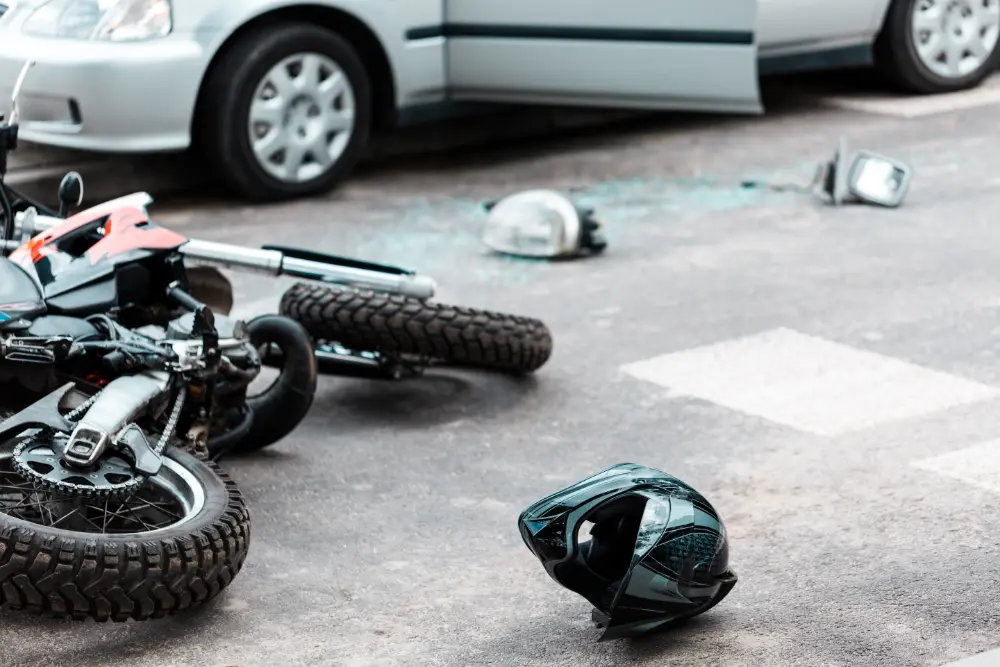
This is not a theoretical risk. In documented operational experience, a team vehicle nearly collected a biker at a crossroads during a total loss recovery. The rider stood up on the pegs and managed to vault clear. There was no collision, but only because the biker reacted quickly enough. The outcome could easily have been catastrophic.
How the Biker Moves Through the Convoy
Understanding how a surveillance motorcyclist operates is essential for every team member on the ground.
The biker does not hold a fixed position. They move like a yo-yo through the convoy, constantly adjusting based on what the commentary is telling them.
If the lights ahead are on a late red — likely to change soon — the biker may hang back, confident the convoy will clear together.
If the lights are on a stale green — likely to change imminently — the biker starts pushing forward, anticipating that the eyeball may make it through and the rest of the convoy may not.
That constant movement means every other driver on the team must operate on one core assumption: the bike could be beside you right now.
The Three Commands Shaping the Biker’s Actions
Although a skilled surveillance motorcyclist should be reading the situation ahead of instruction, three key commands define their operational responses:
1. Make Ground
The biker may be needed shortly. They begin moving towards the front of the convoy, assessing risk points along the way.
2. Come Through
The eyeball is being handed over. The biker moves decisively to take control — often quickly, always at a point when other team vehicles must be fully aware of their position.
3. Cancel
The immediate need has passed. The biker stands down and repositions as required.
A strong surveillance biker will often already be in the right place before these commands are given, because they are listening, anticipating, and reacting to the live picture ahead.
Reducing the Risk: What Every Team Member Must Do
If you work alongside a surveillance motorcyclist, the basics are non-negotiable:
- Check mirrors before every manoeuvre — every single time
- Conduct a proper shoulder check before turns and lane changes
- Assume the bike may be making ground through the convoy
- Heighten awareness at losses, junctions, traffic lights, and obstructions
- Never allow urgency to override procedure
The dangerous moments in surveillance are never the calm ones. They happen when the team is recovering, reacting, and rushing. That is exactly when discipline must tighten, not loosen.
Why Specialist Surveillance Motorcycle Training Matters
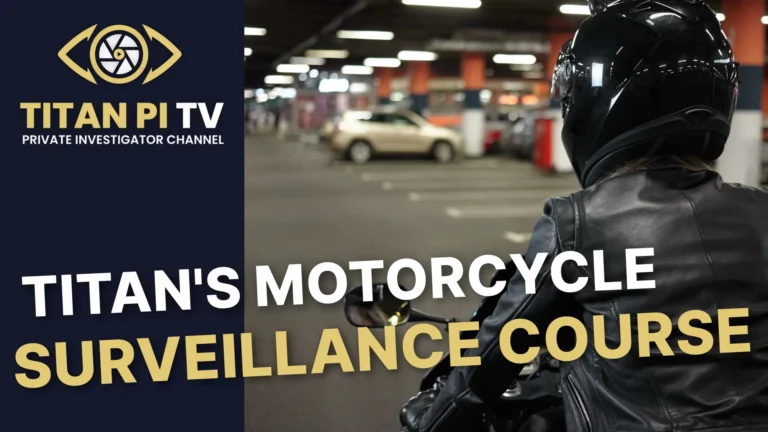
A rider may be exceptionally capable on a motorcycle and still not be operationally ready for surveillance work. The skill set required goes well beyond bike control.
Surveillance motorcycle training, the kind that prepares operatives for real-world deployment, typically covers:
- Day one: A check ride to assess the operative’s existing riding ability
- Day two: Practical surveillance techniques, using cover, making ground, taking parallel routes
- Progressive scenarios: Working alongside a basic vehicle team in live-condition exercises
Those joint exercises are particularly valuable. The biker learns how to support the convoy effectively. The vehicle team learns how to operate safely with a motorcycle in play, reducing the internal risk that this article has outlined.
Practical scenarios covered in quality training programmes include:
- Public transport operations
- Motorway surveillance
- A and B road work
- Motorway services procedures
- Multi-storey car park procedures
For surveillance operatives, qualifying in the motorcycle role brings a genuine commercial advantage. It adds a specialist capability that makes any operative more deployable and, in many cases, commands a higher rate.
The Uncomfortable Truth About Surveillance Operations
The surveillance biker is often the most agile, most valuable asset on any mobile operation. They recover losses. They bridge gaps. They keep the eyeball alive when everything else is breaking down.
But that very agility places them in constant proximity to the rest of the team, and that proximity is where the danger lives.
The biggest threat is rarely dramatic. It is a rushed turn at a crossroads. A missed mirror check. A shoulder check skipped in the heat of a loss recovery.
Every surveillance operative working alongside a motorcyclist needs to hold one thought front of mind throughout the operation:
Drive as if the biker could be beside you at any moment, because quite often, they are.
Work With a Team That Understands Operational Safety
At Titan Investigations, our surveillance operatives are trained to the highest professional standards, including former UK Police and Security Service-trained investigators. We are ISO 9001 certified, and operational discipline is embedded in everything we do, from vehicle surveillance to complex corporate investigations.
Whether you are a business with a corporate investigation requirement or an individual seeking discreet, professional support, our teams operate with precision, confidentiality, and rigorous safety protocols at every stage.
With 10 offices across England, including London, Derby, Nottingham, Manchester, and Cambridge, we are well-placed to assist clients throughout the UK.
Contact Titan Investigations today for a confidential consultation. Our experienced team is ready to discuss your requirements with complete discretion.
About Titan Private Investigation Ltd
Titan Private Investigation Ltd is a leading provider of corporate and private investigation services in the UK. Based in Derby, the company serves clients nationwide, offering a full range of investigative solutions including surveillance, fraud investigation, digital forensics, and more. We are a private investigation agency with a reputation for professionalism, discretion, and delivering results. Titan is the trusted partner of choice for businesses seeking to protect their interests and ensure compliance.
London Surveillance Motorcyclist Training Course – Call the Titan Investigations London Office 020 39046622
Birmingham Surveillance Motorcyclist Training Course – Call the Titan Investigations Birmingham Office 0121 7162442
Cambridge Surveillance Motorcyclist Training Course – Call the Titan Investigations Cambridge Office 01223 662022
Derby Surveillance Motorcyclist Training Course – Call the Titan Investigations Derby (Head Office) 01332 504256
Leeds Surveillance Motorcyclist Training Course – Call the Titan Investigations Leeds Office 0113 4574066
Leicester Surveillance Motorcyclist Training Course – Call the Titan Investigations Leicester Office 0116 2436520
Nottingham Surveillance Motorcyclist Training Course – Call the Titan Investigations Nottingham Office 0115 9646950
Manchester Surveillance Motorcyclist Training Course – Call the Titan Investigations Manchester Office 0161 3023008
Sheffield Surveillance Motorcyclist Training Course – Call the Titan Investigations Sheffield Office 0114 3499400
Truro Surveillance Motorcyclist Training Course – Call the Titan Investigations Truro Office 01872 888706
Alternatively, you can contact us directly using our fully confidential contact form at enquiries@titaninvestigations.co.uk or chat directly using our Live Chat facility, and one of our UK Private Investigators will get right back to you.